Program Overview

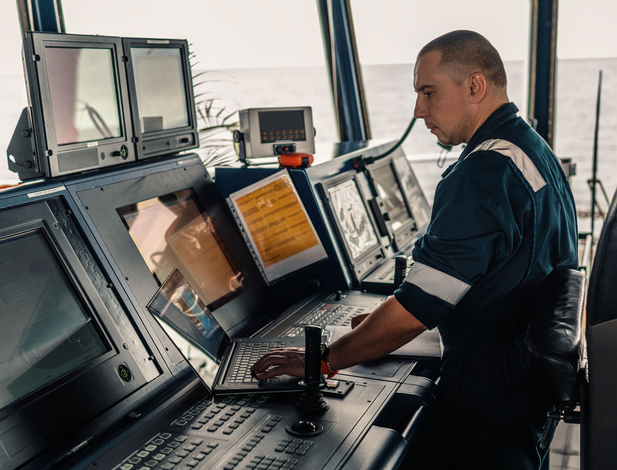
The FCC General Radio Operator’s License course provides the knowledge students require to pass the FCC General Radio Operator’s License exam. The course provides basic radio law and equipment operating practices for ships, aircrafts, and other FCC licensed radio communications equipment. It also provides general electrical and electronic knowledge required to operate, repair, and maintain radio transmitters and receivers. The General Radio Operator's License is recognized by several employers as evidence of knowledge in the radio telecommunications field.

This course is taught with UMass Global’s LIVE ONLINE training format using a video communications software. Students receive the same high-quality training as found in a traditional classroom setting.

At a Glance

Online: Instructor-Led
Approximately 30 hours
3 CEUs
$1500
EdAssist discounted rate: $1,350

Live Online Training Experience

Expert

Instructor-Led in Real Time

Learn directly from an expert instructor delivering content live, allowing for immediate insights and guidance.

Fully Accessible

Access to Course Materials

Receive full access to presentations, resources, and supporting documents to reinforce your learning.

Marketing

Interactive Learning Environment

Engage with classmates and your instructor through a collaborative platform that encourages discussion and participation.

Fast Track

On-Demand Playback

Revisit any session at your convenience with access to recorded classes for continued learning and review.

Upon successful mastery of this course, you will be able to:
  • Recite rules and regulations governing aircraft and maritime radiotelephone communications applicable to the FCC GROL exam
  • Describe electrical/electronic component and radio system principles, concepts, and theory
  • Apply mathematical equations presented in electrical, electronic, and radio theory
  • Describe power source application and types of antennas in radio communications
  • Differentiate equipment and systems used for aircraft navigation
  • Describe radio equipment installation, maintenance, repair practices and procedures
  • Define safety support systems and equipment used for marine navigation
  • Discuss applicable radio and radar equipment/system safety rules and procedures

Tuition covers only the cost of the course. Nothing else is provided to the student.

Resources

Refund Policy

Ways to Get Started